Living Near Boston Public Garden
Downtown's Most Beautiful Park
Luka on the Common sits a few blocks south of Boston Common along Stuart Street in the Theater District. From there, paths through the Common lead directly to Boston Public Garden along Charles Street.
The two parks are connected by the Charles Street Mall, a tree-lined promenade linking Boston Common with the Public Garden and continuing toward Beacon Hill and the Back Bay.
While Boston Common is open and active, the Public Garden is more formal — with winding paths, ornamental trees, and the lagoon at its center.
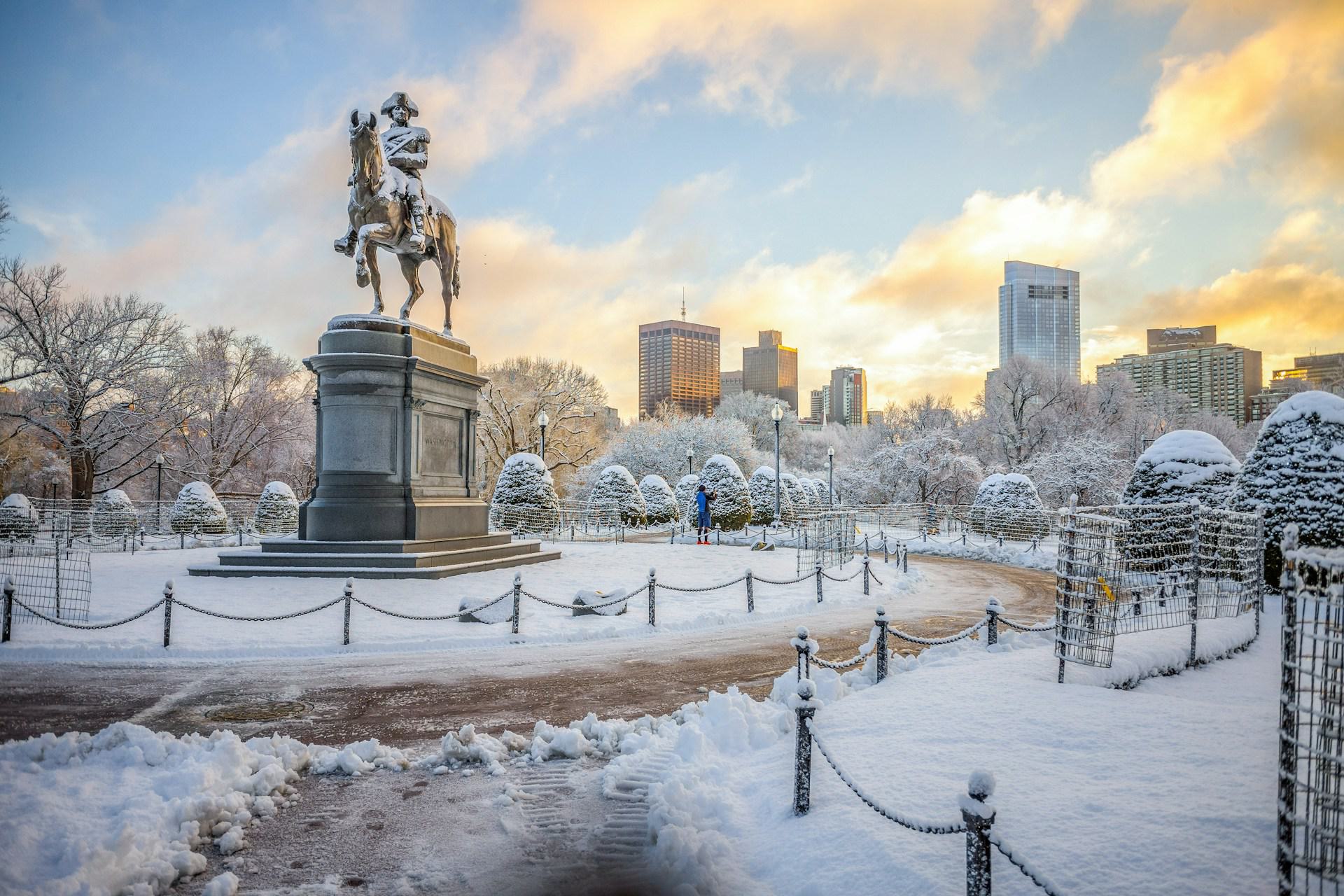
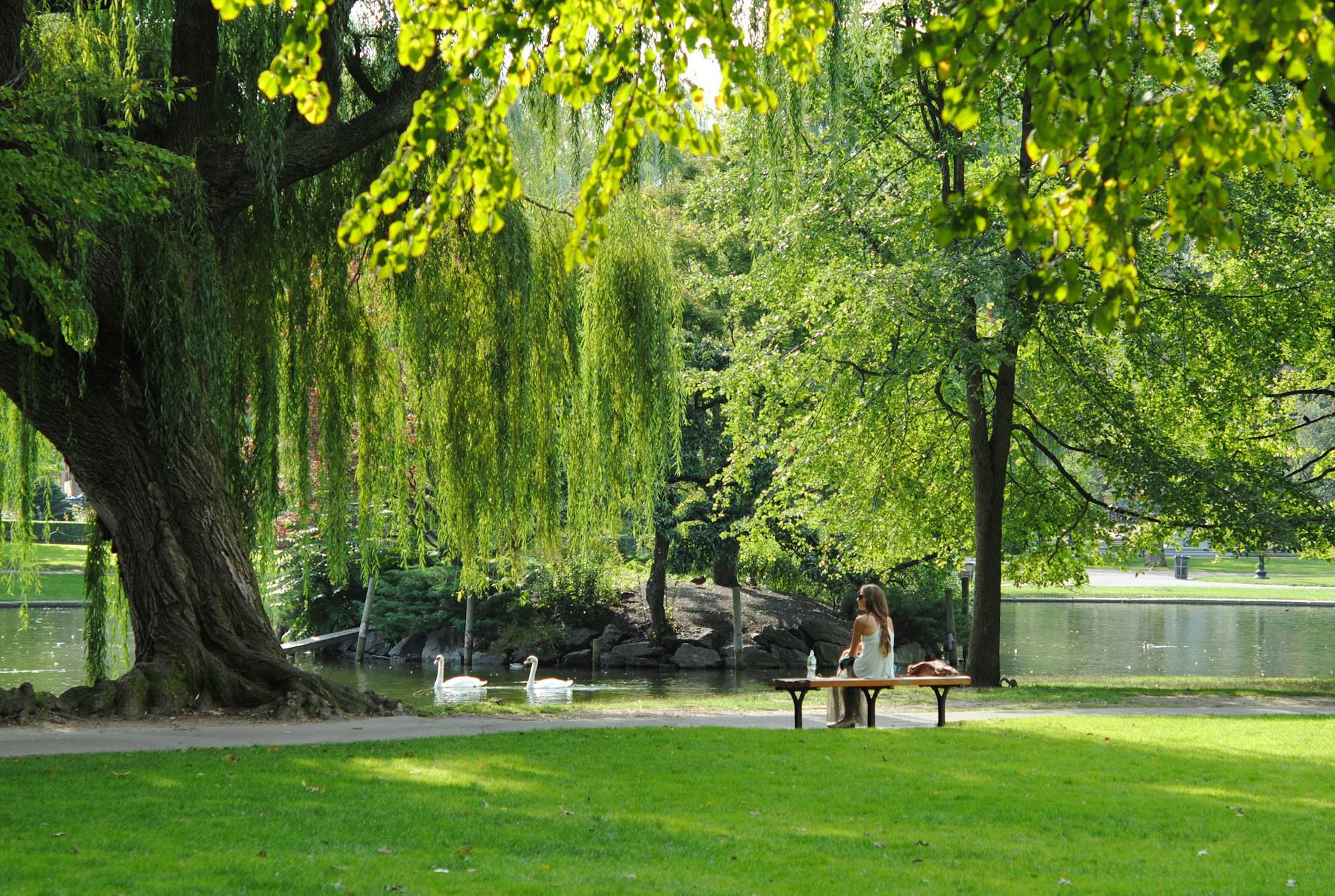
Part of its appeal is how the park changes throughout the year. Spring brings rows of tulips and flowering trees around the lagoon. In summer, the Swan Boats circle the water beneath the willow trees. Fall turns the canopy around the paths shades of red and gold, and winter snowfall transforms the bridge and frozen lagoon into one of the calmest corners of the city.
For residents at Luka on the Common, the garden sits just beyond Boston Common — an easy detour through the park on the way toward Beacon Hill, Back Bay, or the Charles River.
A Quick History of the Garden
The Boston Public Garden opened in 1837 and is widely considered America’s first public botanical garden. Before the park existed, this area was actually tidal marsh connected to the Charles River. The land had to be filled and stabilized before the garden could take shape.
Unlike Boston Common — which began as a colonial grazing field — the Public Garden was designed from the start as a Victorian landscape garden, with curving paths, ornamental trees, and a lagoon at its center. A few details many visitors miss:
- The iconic suspension footbridge over the lagoon dates to 1867 and remains one of the garden’s most recognizable landmarks.
- The George Washington statue facing Arlington Street was installed in 1869 and sculpted by American artist Thomas Ball.
- Many of the garden’s trees are more than 100 years old.
- The Public Garden helped introduce formal botanical gardening to American cities.
The Swan Boats: A Boston Original
In the middle of the lagoon at the Public Garden, a fleet of white swan boats slowly circles the water — one of the most recognizable sights in Boston.
The boats first launched in 1877 and are still operated by the Paget family, now in its fourth generation. Each boat carries passengers around the lagoon while the driver pedals a concealed paddle wheel beneath the swan. Oher fun facts include:
- The swan itself is mostly decorative — the real propulsion comes from the pedal-powered paddle wheel hidden behind it.
- The design was inspired by the opera Lohengrin, where a knight travels in a boat pulled by a swan.
- Swan Boats run seasonally from spring through early fall, making their return each year a small sign that warmer weather has arrived in Boston.
Other Landmarks Inside the Garden
The Public Garden is small enough to cross in a few minutes, but it includes several landmarks that Bostonians instantly recognize. Highlights include:
- The “Make Way for Ducklings” statues, based on Robert McCloskey’s Boston children’s book set in the park.
- The George Washington statue overlooking Arlington Street and the entrance to the garden.
- The 1867 suspension footbridge, one of the most photographed spots in Boston.
- The small island in the middle of the lagoon, ringed by willow trees that lean over the water.
Many of the trees and paths in the garden date back more than a century, giving the park a sense of continuity that’s unusual in the center of a major city.
At Home, Near the Garden
Located near some of downtown Boston's most beloved historical landmarks, inspired modern apartments at Luka on the Common blend thoughful amenties with design-forward, light-filled living spaces.